Understanding Construction Project Management: An Owner’s Guide

If you’ve ever hired a contractor for a remodel or new construction you’ve experienced construction project management firsthand. How a contractor plans, sequences, and controls the work has a direct impact on you. It affects your timeline, your budget, and the quality of the finished product.
Understanding the basics of how construction projects are managed won’t make you a project manager. It will make you a more informed owner. You’ll know the right questions to ask, recognize a well run project, and spot the warning signs when it isn’t.
Why Project Management Matters on Your Job
Every construction project involves a sequence of tasks that have to happen in the right order. It needs to be with the right resources, within a defined timeframe. When that sequencing is managed well, work flows efficiently. Subcontractors show up when they’re supposed to, and delays are caught early before they compound.
When it isn’t managed well, work stalls, costs climb with noclear answer on when things will be done. Poor construction project management is one of the leading causes of budget overruns and timeline failures. And, it’s almost always preventable.
There is no single project management approach that fits every job. The method a contractor uses depends on the size and complexity of the project. Also, the number of variables involved, and how tightly time and resources need to be controlled. Here’s a breakdown of the most common approaches and what they mean in practice.
The Traditional Method: Linear and Step-by-Step
The traditional construction project management method is the most widely used in residential and light commercial construction. It’s straightforward: the project is broken into five sequential stages, each one beginning when the previous one is complete.
- Project Initiation — Defining the scope, establishing goals, and confirming the project is viable.
- Project Planning — Developing the schedule, budget, and resource plan before work begins.
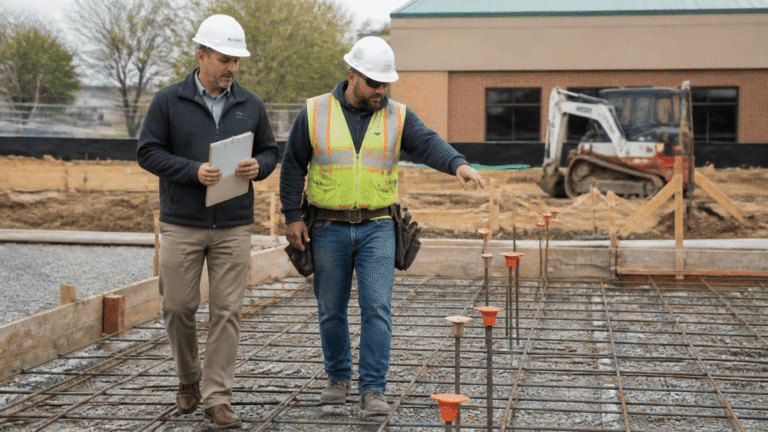
- Execution — The actual construction work, managed against the plan.
- Monitoring and Control — Tracking progress, managing changes, and keeping the project on schedule and on budget.
- Completion and Closeout — Final inspections, punch list resolution, and formal project handover.
This method works well for projects where the scope is clearly defined upfront and significant changes mid-project are unlikely. The linear nature makes it easy to track progress and hold contractors accountable to a schedule. For most homeowners, startups and small business owners, this is the framework your contractor should be working within.
Critical Path Method (CPM): Managing Time and Dependencies
The Critical Path Method was developed by DuPont in 1957. It remains one of the most widely used scheduling tools in construction today. The concept is straightforward:
- Identify every task required to complete the project
- Assign each one a duration
- Determine which tasks are dependent on others being finished first
The resulting “critical path” is the longest sequence of dependent tasks — the chain that determines the earliest possible completion date. Any delay to a task on the critical path delays the entire project by the same amount. A task that takes 12 days instead of the scheduled 10 pushes the finish date back by two days. This assuming it sits on the critical path.
CPM schedules also account for float. Float is built-in buffer time for non-critical tasks giving the project room to absorb minor delays. And without affecting the overall completion date. A contractor who understands float is managing your schedule proactively, not reactively.
From the owner’s side, a CPM schedule is a good indicator that your contractor understands your project in detail. If you’re undertaking a large remodel or new construction, asking to see a CPM schedule is a completely reasonable request. A contractor who can’t produce one is worth a second look.
Critical Chain Project Management (CCPM): Managing Resources
Where CPM focuses on time, Critical Chain Project Management focuses on resources. This means the people, equipment, and materials required to execute the work. Rather than optimizing the schedule around task durations, CCPM sequences work around resource availability to minimize conflicts and improve efficiency.
CCPM is less common in typical residential construction but is used effectively on larger, more complex projects. This is where multiple crews and subcontractors are working simultaneously. It’s the method of choice for large-scale projects managed by organizations like NASA and the U.S. military. This is where resource coordination across many workstreams is critical.
For the average homeowner or small business owner, CCPM is less directly relevant. Understanding resource management is a discipline in itself. It helps explain why a well-run job site differs from a poorly run one. Subcontractors showing up on time, materials ready, and crews not standing around are all signs of intentional resource planning.
Event Chain Methodology (ECM): Managing Risk and Uncertainty
ECM is used on projects where external risks and uncertainties are significant enough to affect the schedule. Rather than building a fixed schedule and hoping for the best, ECM identifies potential risk events upfront. That includes weather delays, material shortages, permitting slowdowns, unforeseen site conditions — and models how those events could trigger downstream effects.
The result is a more realistic schedule that considers what could go wrong, not just what’s planned to go right. ECM works for complex projects like large commercial developments, locations with unpredictable weather, or jobs with long permitting timelines. It produces more accurate cost and time projections than a traditional fixed schedule.
Owners may not interact with ECM directly, but you’ll feel its presence in how your contractor communicates about risk. A contractor using a risk-aware scheduling approach will flag potential issues early. The contractor will present contingency options, and update projections proactively. It’s better than surprising you with bad news after it’s too late to adjust.
What This Means When You’re Hiring a Contractor
You don’t need to be a project manager to benefit from understanding these methods. What matters is knowing what good construction project management looks like from the owner’s side. Use that knowledge when you’re evaluating contractors and overseeing your project.
A few practical takeaways:
- Ask for a schedule before work begins. Any contractor managing your project should be able to provide a written timeline with defined milestones. If they can’t, that’s a red flag.
- Understand the sequence of work. Know which tasks have to be completed before others can begin. This helps you ask informed questions when things appear to slow down.
- Expect proactive communication on delays. A well-managed project surfaces problems early. If you’re only hearing about issues after they’ve already impacted the schedule, the contractor management process is breaking down.
- Tie payments to milestones, not dates. A schedule-based payment structure gives both parties clear benchmarks. It also reduces the risk of paying for work that hasn’t been completed.
The method your contractor uses to manage your project matters. Understanding the basics puts you in a better position to choose the right contractor. Just ask the right questions, and hold the work to the standard you’re paying for.