Construction Defect Statutes: Southwest & Mountain States
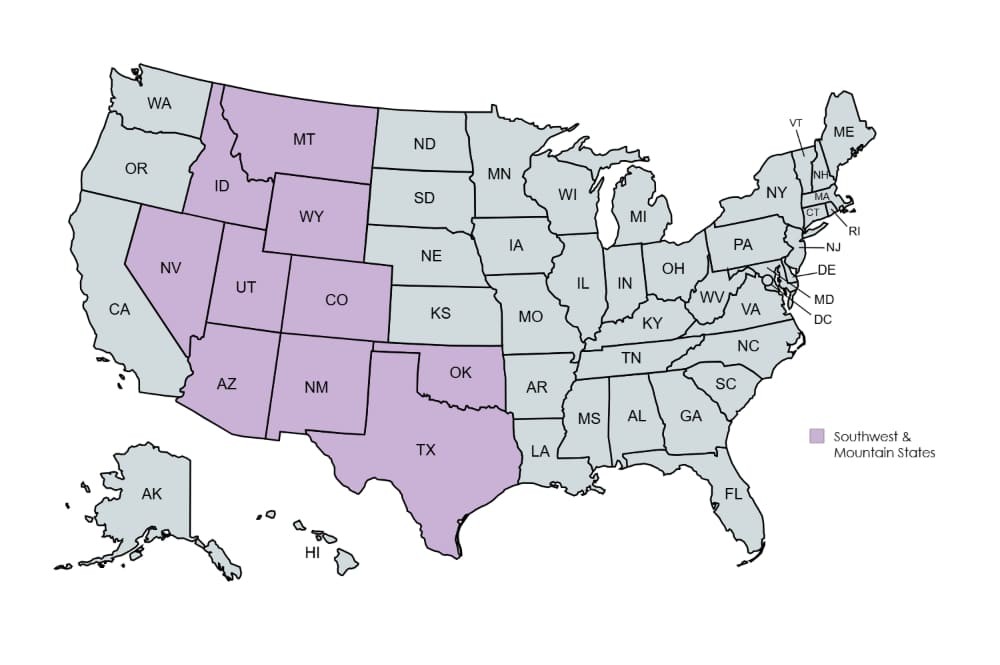
Construction defect deadlines vary sharply across the Southwest and Mountain states, even between neighboring jurisdictions. This guide covers the statute of repose, statute of limitations, discovery rule, and right-to-cure requirements for all 10 jurisdictions in this region.
Each state below is self-contained, so jump straight to yours. For plain-English definitions of these terms, see the State Construction Defect Statute Hub.
Arizona
Arizona allows 8 years from substantial completion, with a 1-year extension for late discovery. That extension applies if the injury occurred or the defect was discovered in year eight. Total exposure under this extension cannot exceed 9 years.
Arizona has enacted a right-to-repair statute specifically for residential construction, giving contractors formal notice and an opportunity to repair before litigation begins.
Colorado
Colorado sets a 6-year repose period from substantial completion, with a 2-year extension available. That extension applies if the claim arises during years five or six, and total exposure under it cannot exceed 8 years from completion.
The underlying statute of limitations is just 2 years, among the shortest in the region.
Colorado has no statutory right-to-cure law. Any notice-and-cure obligation depends on the contract, so confirm this with a licensed attorney before filing.
Idaho
Idaho ties its statute of limitations to substantial completion rather than discovery for tort claims. Tort claims get 6 years from completion, with no separate extension.
Idaho has also enacted a right-to-repair statute covering residential construction specifically.
Montana
Montana allows 10 years from completion of the improvement, with a 1-year extension for late discovery. That extension applies specifically when the injury occurs during year ten itself.
Montana has no statutory right-to-cure law. Any notice-and-cure obligation depends on the contract, so confirm this with a licensed attorney before filing.
Nevada
Nevada allows 10 years from substantial completion, with no late-discovery extension available.
An exception removes the deadline entirely for claims involving fraud in the design, planning, or construction process.
Nevada has no statutory pre-suit notice requirement for construction defect claims.
New Mexico
New Mexico allows 10 years from substantial completion, with no late-discovery extension built into the statute.
This single deadline covers property damage, personal injury, and wrongful death claims arising from a construction deficiency. The underlying statute of limitations runs 4 years, longer than several neighboring states allow.
New Mexico has no statutory right-to-cure law, though contract terms may still create one.
Oklahoma
Oklahoma allows 10 years from substantial completion for most claims.
A separate rule applies if injury occurs during year five specifically. That claim must be filed within 2 years of the injury, but never more than 7 years after completion. This means earlier discovery can sometimes produce a shorter effective deadline than later discovery.
Oklahoma has no statutory right-to-cure law. Any notice-and-cure obligation depends on the contract, so confirm this with a licensed attorney before filing.
Texas
Texas allows 10 years from substantial completion for private-party claims, or 8 years when a government entity is the plaintiff. A written claim filed during that period extends the deadline by 1 or 2 years.
Before filing suit on a residential project, Texas law requires following the Residential Construction Liability Act process first. That process requires written notice and an opportunity to inspect and offer repairs.
Utah
Utah allows 9 years from completion for most claims, with a 2-year extension for late discovery. That extension applies if the claim is discovered during years eight or nine.
A separate 6-year rule applies specifically to contractor warranty claims.
Utah has no statutory right-to-cure law. Any notice-and-cure obligation depends on the contract, so confirm this with a licensed attorney before filing.
Wyoming
Wyoming allows 10 years from substantial completion, with a 1-year extension for late discovery. That extension applies if the injury occurs during year nine specifically, rather than year ten.
The underlying statute of limitations runs 4 years for both property damage and wrongful death claims.
Wyoming has no statutory right-to-cure law. Any notice-and-cure obligation depends on the contract, so confirm this with a licensed attorney before filing.
These deadlines reflect general statutes as of this writing. They may not account for every exception, extension, or court ruling that could apply to a specific case. Confirm any deadline with a construction attorney licensed in the applicable state before relying on it.
Return to the State Construction Defect Statute Hub to check deadlines in another region.
Glossary of Terms
Statute of Limitations:
The deadline to file a claim, counted from when the defect was discovered or reasonably should have been. Miss this window and the claim is barred, even if the defect is real.
Statue of Repose:
A separate, harder deadline counted from a fixed point, usually substantial completion of construction. This clock runs no matter when a defect is found. Once it expires, no claim can be filed, even one day after discovery.
Discovery Rule:
The legal principle that a statute of limitations starts running when a defect is found, or when a reasonable owner should have found it, rather than when construction was completed.
Late-Discovery Extension:
A grace period some states add when a defect surfaces close to the end of the repose period. It gives an owner extra time to file instead of cutting the claim off immediately.
Right-to-Cure:
State rules requiring property owners to give builders written notice and a chance to inspect and fix problems before filing a lawsuit. Requirements vary by state.