Construction Defect Statutes: Southeast States
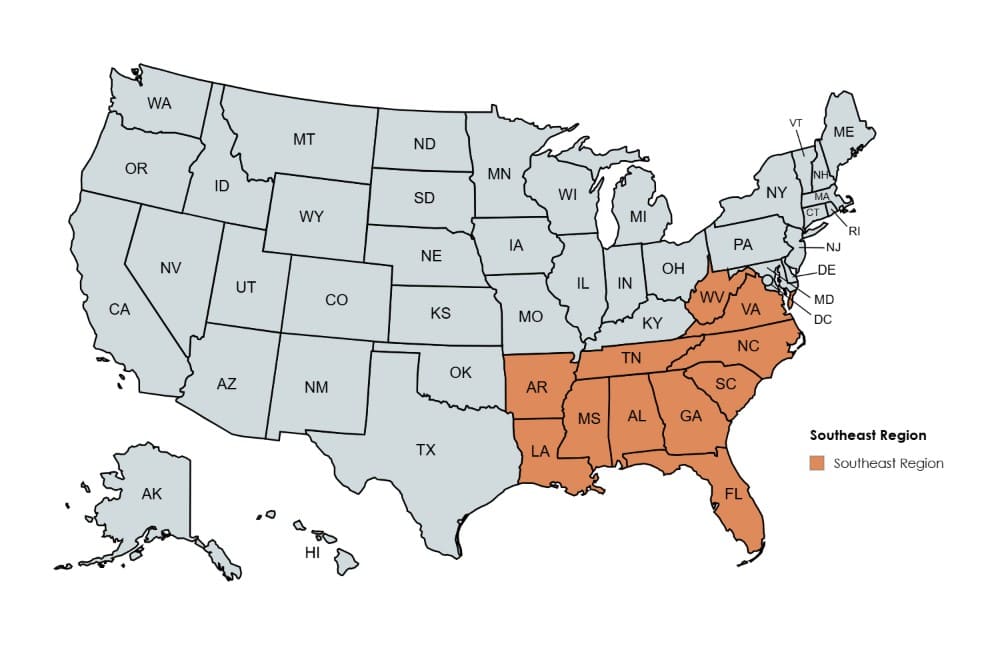
Construction defect deadlines vary sharply across the Southeast, even between neighboring states. This guide covers the statute of repose, statute of limitations, discovery rule, and right-to-cure requirements for all 12 Southeast jurisdictions.
Each state below is self-contained, so jump straight to yours. For plain-English definitions of these terms, see the State Construction Defect Statute Hub.
Alabama
Alabama allows 7 years from substantial completion, with no late-discovery extension.
The underlying statute of limitations is 2 years, running from when the cause of action accrues. An exception applies if the architect, engineer, or builder knew of the defect and hid it.
Alabama has no statutory right-to-cure law. Any notice-and-cure obligation depends on the contract, so confirm this with a licensed attorney before filing.
Arkansas
Arkansas sets a 5-year repose period for property damage claims, with no late-discovery extension.
Personal injury claims follow a separate rule instead, allowing 4 years, with a 1-year extension if the injury occurs in year three. The split matters most on projects with both property damage and injury claims.
Arkansas has no statutory right-to-cure law. Any notice-and-cure obligation depends on the contract, so confirm this with a licensed attorney before filing.
Florida
Florida allows 7 years from substantial completion, with a 1-year extension for late discovery.
Before filing suit, Florida law requires written pre-suit notice under Chapter 558. That notice must go out at least 60 days before litigation, or 120 days on large commercial projects. Contractors then get an opportunity to inspect and propose a repair or settlement.
Chapter 558 tolls the statute of limitations while the process runs, but it does not toll the 7-year statute of repose. Timing the notice correctly matters, and missing this step can get a lawsuit dismissed or stayed entirely.
Georgia
Georgia allows 8 years from substantial completion for property damage, personal injury, or wrongful death claims.
Claims discovered in years seven or eight get a 2-year extension. That extension cannot push total exposure past 10 years from completion.
Georgia has no statutory right-to-cure law. Any notice-and-cure obligation depends on the contract, so confirm this with a licensed attorney before filing.
Kentucky
Kentucky sets a 7-year repose period from substantial completion, with a 1-year extension for late discovery.
The underlying statute of limitations runs 5 years, longer than most neighboring states allow.
Kentucky has no statutory right-to-cure law. Any notice-and-cure obligation depends on the contract, so confirm this with a licensed attorney before filing.
Louisiana
Louisiana’s repose period runs 5 years from registry of the owner’s acceptance of the work. If acceptance isn’t recorded, the clock starts 5 years after occupancy instead.
A separate 10-year prescription period applies specifically to claims against contractors and architects.
Louisiana has no statutory right-to-cure law. Any notice-and-cure obligation depends on the contract, so confirm this with a licensed attorney before filing.
Mississippi
Mississippi caps claims at 6 years from the owner’s written acceptance, actual occupancy, or use, whichever happens first.
The underlying statute of limitations is 3 years, with no late-discovery extension built in. Mississippi’s repose statute does not apply to wrongful death claims, an exception worth flagging on fatality cases.
Mississippi has no statutory right-to-cure law. Any notice-and-cure obligation depends on the contract, so confirm this with a licensed attorney before filing.
North Carolina
North Carolina allows 6 years from the later of substantial completion or the last act giving rise to the claim.
North Carolina has no statutory right-to-repair law, unlike most of its regional neighbors. Any pre-suit notice obligation depends entirely on the contract terms.
South Carolina
South Carolina sets an 8-year repose period from substantial completion, with no late-discovery extension.
Fraud, gross negligence, or recklessness can defeat the repose defense entirely. A building code violation alone is not enough to prove that exception on its own, but it can still support a broader claim of recklessness alongside other evidence.
South Carolina has no statutory right-to-cure law. Any notice-and-cure obligation depends on the contract, so confirm this with a licensed attorney before filing.
Tennessee
Tennessee’s repose period is just 4 years from substantial completion, one of the shortest in the country.
A 1-year extension applies if the injury occurs in year four. Total exposure cannot exceed 5 years from completion under any circumstance.
Tennessee has no statutory right-to-cure law. Any notice-and-cure obligation depends on the contract, so confirm this with a licensed attorney before filing.
Virginia
Virginia sets both its statute of limitations and its statute of repose at 5 years. This unusually tight, symmetrical window covers property damage, personal injury, and wrongful death claims alike.
The statute does not apply to equipment or machinery manufacturers.
Virginia has no statutory right-to-cure law. Any notice-and-cure obligation depends on the contract, so confirm this with a licensed attorney before filing.
West Virginia
West Virginia allows 10 years from substantial completion, among the longest windows in the region.
This period does not begin until the improvement is occupied or accepted by the owner. That detail can meaningfully extend the effective deadline on delayed-occupancy projects.
West Virginia has no statutory right-to-cure law. Any notice-and-cure obligation depends on the contract, so confirm this with a licensed attorney before filing.
These deadlines reflect general statutes as of this writing. They may not account for every exception, extension, or court ruling that could apply to a specific case. Confirm any deadline with a construction attorney licensed in the applicable state before relying on it.
Return to the State Construction Defect Statute Hub to check deadlines in another region.
Glossary of Terms
Statute of Limitations:
The deadline to file a claim, counted from when the defect was discovered or reasonably should have been. Miss this window and the claim is barred, even if the defect is real.
Statue of Repose:
A separate, harder deadline counted from a fixed point, usually substantial completion of construction. This clock runs no matter when a defect is found. Once it expires, no claim can be filed, even one day after discovery.
Discovery Rule:
The legal principle that a statute of limitations starts running when a defect is found, or when a reasonable owner should have found it, rather than when construction was completed.
Late-Discovery Extension:
A grace period some states add when a defect surfaces close to the end of the repose period. It gives an owner extra time to file instead of cutting the claim off immediately.
Right-to-Cure:
State rules requiring property owners to give builders written notice and a chance to inspect and fix problems before filing a lawsuit. Requirements vary by state.