Submittals and RFIs Explained: Stop Costly Contractor Mistakes
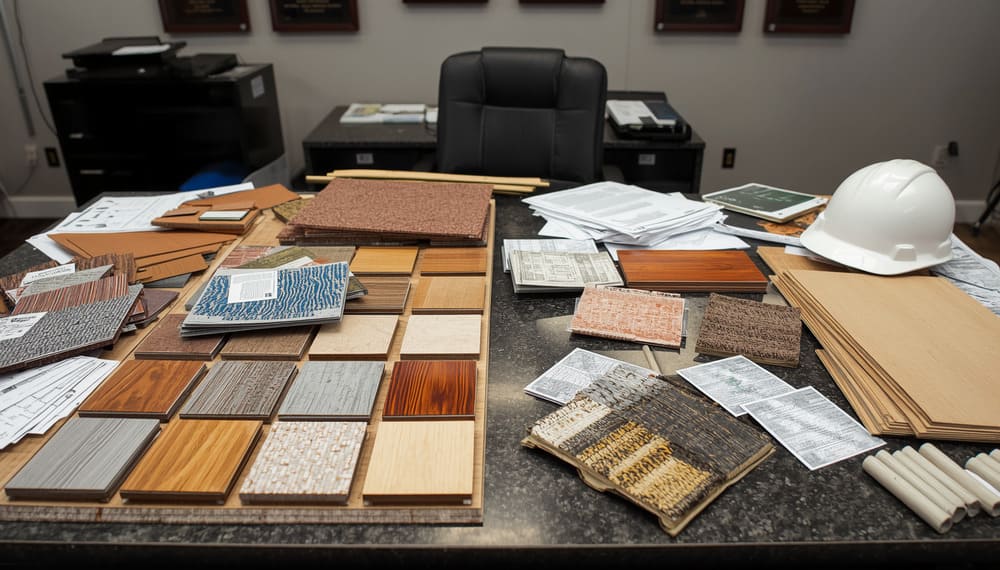
The lingo flies fast in construction, and two terms you will hear frequently are submittals and RFIs. Remodeling a home, building out retail, or setting up an office? Construction sites can feel like a whole other world.
On the surface, submittals and RFIs just look like product samples and extra paperwork. In reality, these two steps in the construction process form a fundamental backbone of your entire project. They are the processes that prevent budget overruns, stop schedule delays, and protect your rights when things go wrong.
Here’s a straight-talk breakdown of what they mean for your project, your budget, and your peace of mind.
What Are Submittals in Construction?
A submittal is a physical product or documentation—e.g., shop drawings, product data sheets, material samples, or physical mock-ups. These are provided by a contractor to the architect, designer, or engineer for formal review and approval. Submittals are a necessary step in the construction process before the contractor can order materials needed in the project.
The purpose is straightforward: to confirm officially, that what the contractor needs to buy and install actually matches what the designer specified.
If you skip the submittal process and go straight to installation, it can become costly. You’re looking at a potential breach of contract terms, tear out and replacement not to mention a schedule impact.
When this happens, you pay in real replacement material costs, real extra labor dollars, and unnecessary frustration.
Real-World Submittal Example:
You are remodeling a kitchen. The contractor provides a shop drawing submittal of a center island layout for the architect’s review. The designer notices the island dimensions block a code-required exit path in the kitchen.
Because this was caught in the submittal, the design gets corrected in shop drawing review. The kitchen island isn’t built with the wrong dimensions. And, no post-installation demolition is required after a failed code and safety inspection.
Common Types of Submittals
- Shop drawings: Detailed diagrams showing exactly how components will be fabricated and installed.
- Product data sheets: Manufacturer specifications for items like paint, flooring, hardware or lighting fixtures.
- Material samples: Physical pieces of tile, brick, carpet, paint or fabric so you can see the actual quality and color.
- Mock-ups: Full-scale physical samples of a wall or finish to see how multiple materials look when put together.
The Construction Submittal Process Step-by-Step
- The contractor prepares and provides the drawings, diagrams or product samples.
- The samples and product data is submitted to the architect, designer or engineer for review.
- That consultant then reviews and stamps it as “reviewed”, “approved” or requests a revision.
- The “approved” or “reviewed” version is distributed back to the contractor for record so that phase of the work can proceed.
What They Don’t Tell You: The Undisclosed Product Switch
Submittal documentation is not without its occasional hitch. What happens when a contractor ignores an approved submittal and installs a different, comparable product in the field?
An approved submittal is a legally binding contractual promise. But what happens if a product is specified, the submittal is approved, and the contractor installs something else entirely in the field?
This is an unapproved substitution, and it happens more often than you think. Here is the often unspoken truth about unauthorized product substitutions and how to handle it:
The Legal Reality: Unapproved Product Substitutions
- Breach of Contract: The contract documents (drawings, specs, and approved submittals) dictate exactly what belongs in the project. Installing anything else without written consent is non-conforming work and a breach of contract.
- Approval Doesn’t Excuse Deviations: Even though the original submittal was approved, that approval only applies to what was on that specific paperwork. It does not give the contractor permission to swap materials later in the field.
Immediate Consequences & Owner Remedies
- The “Notice to Comply”: The owner’s representative (architect, engineer, or project manager) issues a formal notice flagging the non-conforming work and demanding a fix.
- Tear Out and Replace: The owner has the legal right to force the contractor to tear out the incorrect material. Installing the correct, specified product is at the contractor’s sole expense. This includes the cost of any downstream impacts like schedule delay and everything that goes with it.
- Withholding Payment: The owner can legally withhold progress payments for that specific work. And, potentially related subsequent work until the issue is resolved.
Alternative Resolutions (When Tearing it Out Isn’t Feasible)
Sometimes, ripping out the work causes too much schedule damage. In those cases, owners use these alternatives:
- The Credit (Money Back): If the installed product is functional but cheaper, the contractor must issue a request for a deductive change order. This lowers the total contract price and passes the savings back to the owner.
- Retroactive RFI & Change Order: The contractor must submit a late RFI justifying why they changed the product. If the architect reviews it and deems it acceptable, a formal change order is signed to legally update the contract.
- Voided Warranties: If the unauthorized product fails later, the contractor’s general warranty may cover it. However, the specified manufacturer’s warranty for the approved product is complete void because the approved product was never installed.
What Is an RFI in Construction?
An RFI—short for Request for Information—is a formal written question that a contractor or subcontractor initiates. It is sent to the owner and the related consultant when the project plans are unclear, incomplete, or contradictory. It is the official paper trail that says: “We need an answer before we can proceed.”
Without RFIs, contractors guess. Guesses can become incorrect installations. Wrong installations become change orders. And change orders become budget overruns and delays. A properly documented RFI forces a written decision and keeps the project moving on schedule with a legal record. This protects both you and the contractor.
As an owner, you want your contractor asking and documenting RFIs. A contractor who goes silent and keeps building without clarification is a liability. One who raises issues in writing is doing what you hired them to do.
Real-World RFI Example:
A finish schedule on the architectural drawings specify wallcovering in an office conference room. However, an elevation of the conference room walls in the same architectural set show paint as the wall finish. The contractor submits an RFI.
The architect or design consultant responds with the correct finish selection for the conference room, in writing, generally within 48 hours. That response becomes part of the permanent contract record and protects the contractor, designer and the owner.
Had the contractor proceeded without formally asking the question, the result could be an unbudgeted project delay or a costly refinish.
Common RFI Triggers
- Conflicting or contradicting drawings.
- Missing dimensions on the blueprints.
- Unclear or incomplete specification language regarding materials.
- Site conditions that differ from what was assumed on the drawings.
- Material or product substitution requests.
The RFI Process Step-by-Step
- The contractor identifies a gap or conflict.
- The RFI is initiated in writing, uniquely numbered and dated.
- The architect, designer or consultant responds within the time specified in the contract documents.
- The written answer is logged, distributed to the affected parties and the work proceeds as intended.
Submittals and RFIs: What Is the Difference?
Submittals and RFIs are formal project documents in the construction process that create a paper trail. They serve entirely different purposes at different times in a project process but both essential for project success.
A submittal is about front-end verification
The contractor provides documentation for approval before materials are ordered or installation begins. A mandatory verification that the materials and methods match the project specifications. The result is an official stamp of approval or a revision request.
An RFI is about front-end and ongoing clarification
The contractor asks a question because a conflict or gap has appeared in the plans. It can arise at any point. During the initial plan review before the build starts or during construction to clarify ambiguous or missing information. The result is an official, legally binding written answer on the record.
Why You Should Care About Submittals and RFIs
These are not just contractor-only documents. They directly affect your budget, your schedule, and your legal standing if something goes wrong.
- Homeowners: Submittals catch the wrong tile before it is installed. RFIs prevent the guesswork that shows up as a surprise invoice when the contractor bills.
- Small Businesses: Commercial buildouts run on tight timelines. A missed submittal can stall your certificate of occupancy for weeks, costing you potential revenue before you even open.
- Startups: Office and tech buildouts involve complex specs. Both documents create an audit trail that protects you in any dispute with your general contractor.
5 Practical Submittal and RFI Tips for Non-Contractors
You do not need to be a construction expert to protect your investment. You do need to be comfortable with and enforce these five basic rules:
1. Ask for the submittal log before work starts
Any reputable general contractor maintains one. If they do not have one, that is a red flag before a single nail is driven. It’s a living document because not all submittals are provided before construction start. Ensure you get updates as frequently as agreed with the contractor.
2. Never let work proceed on unapproved submittals
If the contractor installs materials before the architect stamps the shop drawing, you may be paying to tear it out. This is at your own expense if you authorized the contractor to proceed without the submittal approval in place.
3. Track the RFI response windows
The construction contract between you and the contractor should specify how many days the design team has to respond. This is typically 5 to 10 business days so the response doesn’t impact schedule or material lead times. Unanswered RFIs cause schedule impacts not only to the trade asking the question but all the connected trades that follow.
4. Turn every verbal answer into a follow-up RFI
If your architect tells the foreman something on a jobsite walk, ask for it to be confirmed in writing. Verbal directions are not contract modifications and will not hold up in a dispute. A follow-up RFI confirming the field direction makes it official.
5. Read all responses for submittals and RFIs before signing off
Both submittal and RFI documents protect you in disputes, but the paper trail tells a story. If a contractor notes that a change impacts the budget and you sign off blindly, you have legally accepted it and the cost associated with it. Read every response carefully so you can make a budget adjustment or apply those costs to a contingency reserve.
The Bottom Line
Submittals say, “Here is what we are going to use—do you approve?” RFIs say, “The plans don’t make this clear—what’s the answer?” Together, they form a backbone of any well-run construction project. Understanding their meaning says you can ask for them, track them, and use them to keep your project on schedule.
Note: Submittals and RFIs are a standard process across residential, commercial, and institutional construction in the US. Contract language and response timelines vary, so always review your specific agreement before work begins.