Contractor Did Poor Work? What You, as an Owner can Actually Do
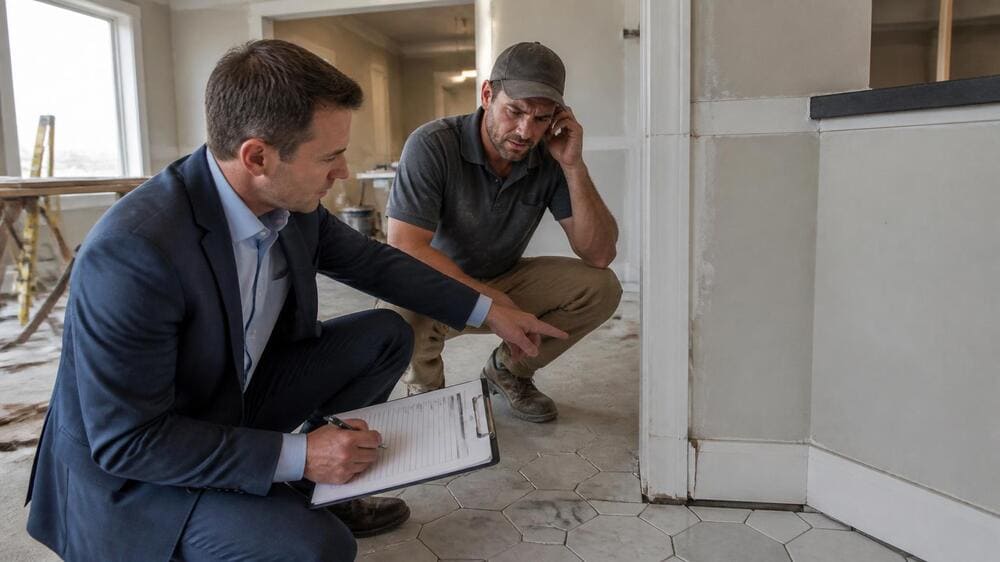
Realizing a contractor did poor work is frustrating. It’s also more common than most owners expect. The good news is you have real options. Those options range from a simple written notice to a formal legal claim. The right path depends on your contract, your state’s laws, and how the contractor responds once you raise the issue.
This guide walks through the practical steps to take, starting with documentation and ending with formal remedies if the contractor won’t cooperate.
A real-world scenario
An owner hires a contractor to install new hardwood flooring throughout the main floor. Within a few weeks, boards begin cupping near the exterior walls. The owner calls the contractor, who insists it’s normal settling. Three months pass with no follow-up. The owner is left wondering whether to pay the final invoice, hire someone else to fix it, or take legal action. This situation, work that clearly fails, paired with a contractor who won’t own it, is exactly where the guidance below applies.
Construction defect or unsatisfied expectations
Before pursuing any remedy, it’s worth asking a hard question. Is this a real construction defect, or is it a case of unrealized expectations? The two look similar from the owner’s side, but they’re treated very differently once a dispute officially moves forward.
A construction defect fails a certain standard. That standard might be the local building code or the manufacturer’s installation instructions. Or the standard of care a licensed professional in that trade is expected to meet. Cupping hardwood near exterior walls, from the scenario above, is a good example.
If it’s missing expansion gaps or a moisture barrier that wasn’t installed per the manufacturer’s spec, that’s measurable. A contractor’s word that it’s “normal settling” doesn’t make it not a defect if the installation manual says otherwise.
An expectation mismatch is much different. No code was violated and no specification was ignored. The owner simply wanted something the finished product didn’t quite deliver:
- A finish that isn’t as glossy as pictured
- Grout color slightly off from a sample
- Texture that doesn’t match watch was visualized
This isn’t a legal defect, even though it’s a real disappointment. The distinction matters because every remedy that follows only has teeth against an actual defect. Those remedies may be notice and cure, withholding payment, a licensing board complaint, or a lawsuit.
Courts and arbitrators measure the work against code and industry standard. Not against how the owner pictured the finished project. That’s exactly why a third-party inspection carries so much weight. An inspector’s written opinion establishes, on paper, which side of that line the work actually falls on.
Documenting defective contractor work
Before contacting the contractor, or a lawyer, build a record. Take dated photos and video of the defective work. Save every email, text, and invoice related to the project.
Note the dates of any verbal conversations, along with who said what. This documentation matters later, whether you end up in mediation, small claims court, or filing a licensing board complaint. Poor documentation is the single biggest reason owners lose otherwise potentially valid claims.
Notice and cure clauses in construction contracts
Most written construction contracts include a notice and cure provision. This clause requires you to notify the contractor in writing about the defect. It also gives the contractor a set period, often 10 to 30 days, to fix the problem before you can pursue other remedies.
Skipping this step can weaken your position later, even if the work is genuinely bad. If your contract has this clause, follow it exactly. Send a written notice, specific description of the defect, and a clear deadline for the contractor to respond.
If you don’t have a written contract, or the contract is silent on this point, send a written demand letter. This still puts the contractor on formal notice and it also starts building your paper trail.
What counts as poor workmanship legally
Not every disappointment is a legal defect. Courts generally look at whether the work fails to meet the applicable building code. Also the manufacturer’s installation specifications, or the standard of care expected of a licensed professional in that trade.
Cosmetic preferences, like not loving a paint color, usually don’t qualify. Structural issues, code violations, and workmanship that falls below industry standards typically do.
Hiring a third-party inspector to evaluate the work
An independent third-party inspection is often the turning point in a dispute like this. A licensed inspector, or a specialist in the relevant trade, examines the work.
They then issue a written opinion on whether it meets code and industry standard. That opinion carries weight the contractor’s word doesn’t. It carries even more weight in mediation, arbitration, or a courtroom.
The right inspector depends on the defect. As an example, for structural or code issues, a licensed home inspector or structural engineer is typical. For flooring, roofing, or HVAC, a manufacturer-certified inspector. Or an independent specialist in that trade will carry more credibility than a general home inspector.
Some manufacturers, particularly flooring and roofing brands, maintain lists of certified inspectors specifically for warranty and defect disputes. Using one of these can also preserve a manufacturer warranty claim alongside your dispute with the contractor.
Cost typically runs a few hundred dollars for a straightforward residential inspection. Generally more for structural engineering opinions or larger commercial projects. The owner usually pays for this inspection upfront, since it’s the owner requesting it.
That cost is often recoverable later. If the inspection supports your claim and you win in a dispute, many contracts and state laws allow inspection fees to be included. These would be as part of your damages or added to a small claims filing. Keep the invoice and the written report together with the rest of your documentation.
It’s worth asking the contractor, in writing, whether they’ll agree to a jointly selected inspector before you hiring your own. A contractor willing to accept a neutral third party’s findings can resolve the dispute faster. And often without further cost. A contractor who refuses tells you something too, and it strengthens your position if the dispute moves further.
Remedies when a contractor won’t fix defective work
If the notice and cure period passes with no resolution, several paths open up, and they aren’t mutually exclusive:
- Withhold final payment, if work remains incomplete or defective and your contract allows it
- File a complaint with your state contractor licensing board, which can investigate and discipline the license
- Pursue mediation or arbitration, if your contract requires it before litigation
- File a claim in small claims court, for damages within your state’s dollar limit
- File a civil lawsuit for breach of contract, if damages exceed small claims limits
- Hire another contractor to correct the work, then seek reimbursement through one of the above
Withholding payment deserves a caution. Many states allow it only for the value of the defective portion, not the entire remaining balance. Withholding more than the contract or state law permits can expose you to a claim from the contractor. Check your contract’s payment terms and your state’s rules before withholding a lump sum.
Statute of limitations for construction defect claims
Every state sets a deadline for filing a construction defect or breach of contract claim. These deadlines vary widely, and some defects, especially hidden ones, follow a discovery rule. That starts the clock when the problem is found rather than when the work was done.
Don’t assume you have unlimited time simply because the issue only surfaced recently. If a claim is a possibility, confirm your state’s specific deadline early rather than after time has already run out.
Filing a licensing board complaint against a contractor
A licensing board complaint won’t get you reimbursed directly in most states, but it can still be worth filing. Some states maintain a recovery fund that compensates homeowners harmed by licensed contractors, funded through licensing fees.
A complaint can also trigger an investigation that results in discipline. This protects future homeowners even if it doesn’t put money back in your pocket.
If your state has a recovery fund, this is often the most direct path to actual reimbursement, separate from litigation.
The bottom line on poor contractor work
If a contractor did poor work it isn’t something you have to simply accept. Start with documentation and follow your contract’s notice and cure process. Get an independent opinion if there’s any dispute over whether the work is actually defective.
From there, the right remedy depends on your contract, your state’s laws, and how much is at stake. Acting early and in writing puts you in the strongest position, no matter which path you end up taking.