Construction Defect Statute of Limitations: Northeast States
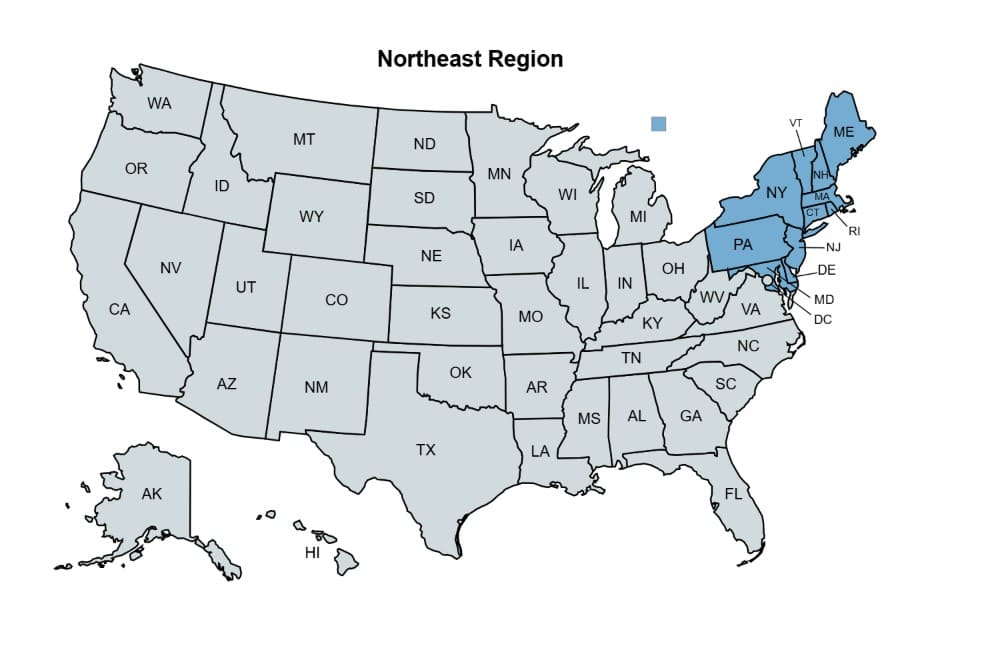
Construction defect deadlines vary sharply across the Northeast, even between neighboring states. This guide covers the statute of repose, statute of limitations, discovery rule, and right-to-cure requirements for all 12 Northeast jurisdictions.
Each state below is self-contained, so jump straight to yours. For plain-English definitions of these terms, see the State Construction Defect Statute Hub.
Connecticut
Connecticut’s 7-year statute of repose applies only to architects and professional engineers, not general contractors. A contractor’s exposure is governed by different rules entirely.
The statute of limitations is 3 years, with a 1-year extension for late discovery. A 2012 state supreme court ruling held the deadline does not apply to state-brought claims, which matters on public projects.
Connecticut has no statutory right-to-cure law. Any notice-and-cure obligation depends on what the contract itself says, so review the contract language before filing.
Delaware
Delaware sets a 6-year statute of repose from substantial completion, with no late-discovery extension available.
The 2-year statute of limitations runs from whichever triggering date the statute specifies, which is not always the date a defect was actually discovered. Confirm the applicable trigger date early, since it can shrink the effective filing window well below 2 years.
Delaware has no statutory right-to-cure law. Any notice-and-cure obligation depends on the contract, so confirm this with a licensed attorney before filing.
Maine
Maine combines its limitations and repose periods into a single 6-year window for most claims, running from substantial completion.
Architects and engineers face a separate rule: 4 years from discovery, capped at 10 years after completion. That split matters most when a design firm and a builder share responsibility for the same defect.
Maine has no statutory right-to-cure law. Any notice-and-cure obligation depends on the contract, so confirm this with a licensed attorney before filing.
Maryland
Maryland’s statute of repose depends on who is being sued. Claims against architects, engineers, or contractors are capped at 10 years from substantial completion.
Claims against other parties connected to the project, like material suppliers or unlicensed subcontractors, get a longer 20-year window instead. The statute of limitations is 3 years.
Maryland has no statutory right-to-cure law. Any notice-and-cure obligation depends on the contract, so confirm this with a licensed attorney before filing.
Massachusetts
Massachusetts caps claims at 6 years from the earlier of substantial completion or the owner taking possession.
Contract-based claims follow a different rule than tort claims, falling under the state’s standard 6-year contract statute of limitations instead.
A 2025 state supreme court decision clarified how indemnification claims accrue. They run from the date a plaintiff formally tenders a claim to the builder, not from the original completion date.
Massachusetts has no statutory right-to-cure law. Any notice-and-cure obligation depends entirely on what the contract says, so review the contract language before filing.
New Hampshire
New Hampshire allows 8 years from substantial completion, with no late-discovery extension built into the statute.
This single deadline covers property damage, personal injury, wrongful death, and economic loss claims alike. That simplifies things compared to states that split each claim type into its own rule.
New Hampshire has no statutory right-to-cure law. Any notice-and-cure obligation depends on the contract, so confirm this with a licensed attorney before filing.
New Jersey
New Jersey sets a 10-year statute of repose from substantial completion.
New Jersey courts apply a strong discovery rule for the underlying 6-year limitations period, and well-developed case law addresses latent defects specifically. That combination gives owners more practical runway than the raw numbers suggest, assuming the repose deadline hasn’t already passed.
New Jersey has no statutory right-to-cure law. Any notice-and-cure obligation depends entirely on what the contract itself says.
New York
New York has no statute of repose for construction defect claims. Design professionals and contractors can theoretically face claims decades after a project finishes.
A separate notice requirement applies to claims against design professionals filed more than 10 years after completion. It does not bar the claim outright; it simply adds a procedural step before filing.
New York has no statutory right-to-cure law, but its courts have gone a step further, treating a right to cure as an implied term of construction contracts. This applies even when the contract stays silent on the issue.
Pennsylvania
Pennsylvania’s statute of repose runs 12 years from completion, longer than nearly every other state in the region.
Claims discovered between years 10 and 12 get a further extension, capping total exposure at 14 years. This longer window is worth flagging on institutional projects like hospitals and universities, where defects often surface well after standard warranty periods expire.
Pennsylvania has no statutory right-to-cure law. Any notice-and-cure obligation depends entirely on what the contract itself says.
Rhode Island
Rhode Island sets both its statute of limitations and its statute of repose at 10 years. That’s an unusually simple structure compared to neighboring states, which split the two deadlines apart.
This single 10-year window applies to architects, engineers, contractors, and material suppliers alike, with no separate discovery-based extension.
Rhode Island has no statutory right-to-cure law. Any notice-and-cure obligation depends on the contract, so confirm this with a licensed attorney before filing.
Vermont
Vermont has no dedicated construction repose statute on the books. Claims generally fall under the state’s standard 6-year civil statute of limitations.
Accrual is determined by when a plaintiff could first bring the claim. Without a repose statute acting as an outer limit, Vermont claims can theoretically run longer than in most neighboring states.
Vermont has no statutory right-to-cure law. Any notice-and-cure obligation depends on the contract, so confirm this with a licensed attorney before filing.
Washington, D.C.
The District of Columbia allows 10 years from substantial completion, with no late-discovery extension.
This single deadline covers personal injury, property damage, and wrongful death claims arising from defective improvements. That gives D.C. one of the more straightforward frameworks in the region.
D.C. has no statutory right-to-cure law. Any notice-and-cure obligation depends on the contract, so confirm this with a licensed attorney before filing.
These deadlines reflect general statutes as of this writing. They may not account for every exception, extension, or court ruling that could apply to a specific case. Confirm any deadline with a construction attorney licensed in the applicable state before relying on it.
Return to the State Construction Defect Statute Hub to check deadlines in another region.
Glossary of Terms
Statute of Limitations
The deadline to file a claim, counted from when the defect was discovered or reasonably should have been. Miss this window and the claim is barred, even if the defect is real.
Statue of Repose
A separate, harder deadline counted from a fixed point, usually substantial completion of construction. This clock runs no matter when a defect is found. Once it expires, no claim can be filed, even one day after discovery.
Discovery Rule
The legal principle that a statute of limitations starts running when a defect is found, or when a reasonable owner should have found it, rather than when construction was completed.
Late-Discovery Extension
A grace period some states add when a defect surfaces close to the end of the repose period. It gives an owner extra time to file instead of cutting the claim off immediately.
Right-to-Cure
State rules requiring property owners to give builders written notice and a chance to inspect and fix problems before filing a lawsuit. Requirements vary by state.