Construction Contract Conflict: How Small Businesses Get Burned by Their Own Paperwork
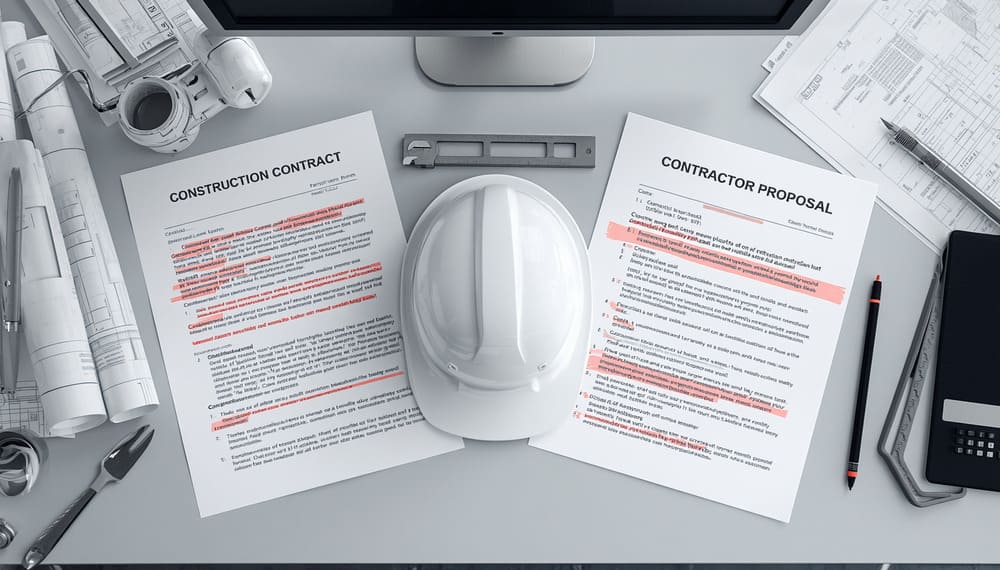
Construction contract conflict happens because most small businesses and startups don’t know what they need to ask. By the time they find out, the dispute is already in progress.
Here’s the scenario: You’ve gone back and forth with a contractor. They’ve submitted a proposal — several pages of scope, pricing, and their standard terms and conditions buried at the bottom. You’ve negotiated. You’ve signed a construction contract. Work begins.
Then something goes sideways. Maybe it’s a payment dispute or it’s a scope disagreement. Perhaps the contractor is pointing to language in their original quote that says something different from what your signed contract says.
Which document controls? If your contract doesn’t answer that question explicitly, you may be in for an expensive lesson.
Their Quote Is Not the Contract — But It Travels With It
The construction contract conflict dilemma starts when a contractor submits a proposal or quote, it almost always contains their own boilerplate terms. Payment schedules. Dispute resolution language. Warranty limitations. Liability caps. Exclusions. Some of it is reasonable. Some of it is written entirely in the contractor’s favor.
The problem is that most small business owners focus on the price and the scope — and sign without reading the fine print in the quote. Then they negotiate and sign a separate construction contract. Now you have two documents with potentially conflicting terms, and no clear answer as to which one governs when they disagree.
Contractors know this. Some count on it.
If a contractor resists adding a conflicting terms clause to your contract — or insists their quote terms control — that’s a significant warning sign. A contractor confident in their work doesn’t need their boilerplate to bail them out. Also a contractor that wants to establish a relationship with you and your business will work with you on terms.
The Construction Contract Clause That Fixes It
The solution is straightforward, and it belongs in every construction contract you sign. Here is sample language:
“It is expressly agreed by and between Owner and Contractor that should there be any conflict between the terms of the executed Construction Contract and the Contractor’s quote terms, this Construction Contract shall control; and nothing in this Contract shall be considered as an acceptance of any conflicting terms.”
Plain English: the signed contract wins. Every time. No exceptions.
This clause does three things at once:
- It establishes a clear hierarchy — the executed contract is the controlling document
- It eliminates ambiguity about which terms govern in a dispute
- It prevents a contractor from later arguing that your signature on the contract was also an acceptance of their quote terms
Why This Matters More Than You Think
You might be thinking: we negotiated and signed a contract, so obviously that’s what governs. Not necessarily.
In construction disputes, opposing parties routinely introduce every document in the paper trail. That includes emails, quotes, RFIs (Requests for Information), meeting notes, change orders. If your signed contract is silent on which document controls, an arbitrator or judge has to interpret the intent of both parties. That’s expensive, time-consuming, and unpredictable.
Contractor quote terms frequently contain:
- Shortened warranty periods — less protection than your contract provides
- Dispute resolution clauses — requiring arbitration in a venue favorable to the contractor
- Payment acceleration language — making full payment due faster than your negotiated schedule
- Liability limitations — capping what you can recover in a dispute
Any one of those working against you in a dispute could cost more than the original contract was worth.
From the Field:
A startup brought in a contractor to build out their first commercial office space. The contractor’s quote included a clause requiring all disputes to go to arbitration in the contractor’s home county — three states away.
The owner’s construction contract said nothing about dispute resolution. When a payment dispute arose, the contractor pointed to their quote. The startup’s legal team spent two months sorting out jurisdiction before the actual dispute was even addressed. One sentence in the contract would have prevented it entirely.
Where This Clause Goes — and How to Get It In
This language belongs in the General Conditions or Contract Terms and Conditions section of your construction contract. That is typically near the front, before scope and payment terms. It should be visible, not buried.
If you are working from a contractor-supplied contract, add it as a rider or addendum and have both parties initial it. If you are drafting your own contract, it goes in as a standard clause alongside your other general conditions.
Most contractors will not object. It is a reasonable, standard commercial protection. If a contractor has a major issue with it, that is information worth knowing before you sign anything.
A Contracts Note for Startups Specifically
If your business is young, you may not yet have a standard construction contract template. You may be relying on contracts provided by contractors — which means you are starting from their terms, not yours.
That’s a common and understandable position. But it means you need to be more vigilant, not less. Read every page of a contractor-supplied contract. Read their quote terms. Compare them. Anywhere they conflict, negotiate the contract language and add the controlling terms clause before you sign.
It costs nothing to ask. It can cost a great deal not to.
The Bottom Line
Construction contract conflict disputes are rarely about the big, obvious things. They’re about the gap between what each party thought they agreed to — and what the paperwork actually says.
The conflicting terms clause doesn’t prevent disputes from happening. What it does is make sure that when a dispute arises, you’re fighting on your own ground, with your own terms controlling the outcome.
One sentence. Add it to every contract before you sign.
Related reading: If you’re building your first construction contract from start to finish, the Before You Sign series covers every major section you need to understand before a contractor picks up a pen.