
Construction defect claims run on two separate clocks, and most owners only know about one. The construction defect statute of limitations sets a deadline based on when a defect is discovered.
The statute of repose sets a hard deadline based on when construction finished, regardless of discovery. A defect found in year nine can still be timely under one clock and dead under the other.
The table below covers both deadlines for every state, along with whether late discovery buys you any extra time. That’s followed by the deep dive for each state and region.
Key Terms in Plain English
Defect:
A flaw in materials, workmanship, or design that keeps a structure from performing as it should. Some defects are visible right away (patent defects), like a cracked slab. Others stay hidden for years (latent defects), like a failing waterproofing membrane behind a wall.
Statute of Limitations:
The deadline to file a claim, counted from when the defect was discovered or reasonably should have been. Miss this window and the claim is barred, even if the defect is real.
Statue of Repose:
A separate, harder deadline counted from a fixed point, usually substantial completion of construction. This clock runs no matter when a defect is found. Once it expires, no claim can be filed, even one day after discovery.
Discovery Rule:
The legal principle that a statute of limitations starts running when a defect is found, or when a reasonable owner should have found it, rather than when construction was completed.
Late-Discovery Extension:
A grace period some states add when a defect surfaces close to the end of the repose period. It gives an owner extra time to file instead of cutting the claim off immediately.
Right-To-Cure:
State rules requiring property owners to give builders written notice and a chance to inspect and fix problems before filing a lawsuit. Requirements vary by state.
Statute of Limitations vs. Statute of Repose
The statute of limitations starts when an owner discovers the defect, or reasonably should have. It gives a fixed window from that discovery date to file a claim. The statute of repose works differently. It starts on a fixed date, usually substantial completion of the project, and runs regardless of when a defect turns up.
Here’s how that plays out in real life. A commercial building owner finds a roof membrane failure eight years after the roof was installed. If the state’s statute of limitations gives four years from discovery, that clock hasn’t run yet. But if the statute of repose cuts off claims at seven years from completion, the claim is already barred after year seven. The repose deadline controls, even though the owner acted quickly once the problem surfaced.
Some states soften this with a late-discovery extension. If the defect surfaces near the end of the repose period, the owner gets a short additional window (often one to two years) to file. Other states offer no cushion, and the repose deadline is final.
Construction Defect Statutes by State
The figures below reflect general property-damage claims against contractors, architects, and engineers.
Many states carve out different periods for personal injury, wrongful death, or specific defendant types. Case law can shift how courts apply these statutes.
Confirm any deadline with a construction attorney licensed in the relevant state before relying on it.
Construction Defects Statutes Table by State
| State | Statute of Repose | Statute of Limitations | Late-Discovery Extension |
|---|---|---|---|
| Alabama | 7 years | 2 years | No |
| Alaska | 10 years | 2 years | No |
| Arizona | 8 years | 2 years | Yes (1 yr) |
| Arkansas | 5 years | 3 years | No |
| California | 10 years* | 3 years | No |
| Colorado | 6 years | 2 years | Yes (2 yrs) |
| Connecticut | 7 years | 3 years | Yes (1 yr) |
| Delaware | 6 years | 2 years | No |
| DC | 10 years | 3 years | No |
| Florida | 7 years | 4 years | Yes (1 yr) |
| Georgia | 8 years | 4 years | Yes (2 yrs) |
| Hawaii | 10 years | 2 years | No |
| Idaho | 6 years | 3 years | No |
| Illinois | 10 years | 5 years | Yes (4 yrs) |
| Indiana | 10 years | 6 years | Yes (2 yrs) |
| Iowa | 10 years* | 5 years | Yes (1 yr) |
| Kansas | 10 years | 2 years | No |
| Kentucky | 7 years | 5 years | Yes (1 yr) |
| Louisiana | 5 years | 2 years | Yes (1 yr) |
| Maine | 6 years | 6 years | No |
| Maryland | 10 years* | 3 years | No |
| Massachusetts | 6 years | 3 years | No |
| Michigan | 6 years | 3 years | Yes (1 yr) |
| Minnesota | 10 years | 6 years | Yes (2 yrs) |
| Mississippi | 6 years | 3 years | No |
| Missouri | 10 years | 5 years | No |
| Montana | 10 years | 3 years | Yes (1 yr) |
| Nebraska | 10 years | 4 years | No |
| Nevada | 10 years | 3 years | No |
| New Hampshire | 8 years | 3 years | No |
| New Jersey | 10 years | 6 years | No |
| New Mexico | 10 years | 4 years | No |
| New York | None | 3 years | N/A |
| North Carolina | 6 years | 3 years | No |
| North Dakota | 10 years | 6 years | Yes (2 yrs) |
| Ohio | 10 years | 4 years | Yes (2 yrs) |
| Oklahoma | 10 years | 2 years | No |
| Oregon | 10 years* | 2 years | No |
| Pennsylvania | 12 years | 2 years | Yes (2 yrs) |
| Rhode Island | 10 years | 10 years | No |
| South Carolina | 8 years | 3 years | No |
| South Dakota | 10 years | 6 years | Yes (1 yr) |
| Tennessee | 4 years | 3 years | Yes (1 yr) |
| Texas | 10 years* | 2 years | Yes (2 yrs) |
| Utah | 9 years | 3 years | Yes (2 yrs) |
| Vermont | None* | 3 years | N/A |
| Virginia | 5 years | 5 years | No |
| Washington | 6 years | 3 years | No |
| West Virginia | 10 years | 2 years | No |
| Wisconsin | 7 years | 6 years | Yes (3 yrs) |
| Wyoming | 10 years | 4 years | Yes (1 yr) |
Find the Regional Deep Dive for Your State
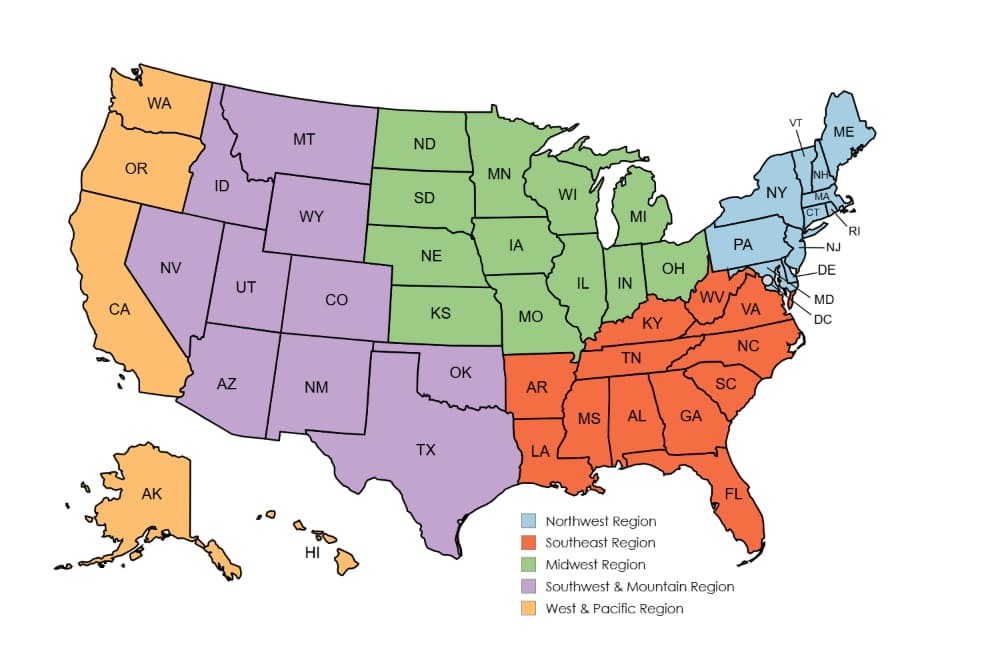
Each region below links to a full breakdown, including notable case law, discovery rule quirks, and right-to-cure notice requirements that don’t fit in a summary table.
- Northeast — Connecticut, Delaware, Maine, Maryland, Massachusetts, New Hampshire, New Jersey, New York, Pennsylvania, Rhode Island, Vermont, Washington D.C.
- Southeast — Alabama, Arkansas, Florida, Georgia, Kentucky, Louisiana, Mississippi, North Carolina, South Carolina, Tennessee, Virginia, West Virginia
- Midwest — Illinois, Indiana, Iowa, Kansas, Michigan, Minnesota, Missouri, Nebraska, North Dakota, Ohio, South Dakota, Wisconsin
- Southwest/Mountain — Arizona, Colorado, Idaho, Montana, Nevada, New Mexico, Oklahoma, Texas, Utah, Wyoming
- West/Pacific — Alaska, California, Hawaii, Oregon, Washington
Statute of repose deadlines are the ones that catch owners off guard, since they run whether or not a defect has been found. Bookmark this page and check the regional breakdown for your state before assuming a discovery-based deadline is the only clock running.