Third-Party Inspection: The Build Scrutiny You Need
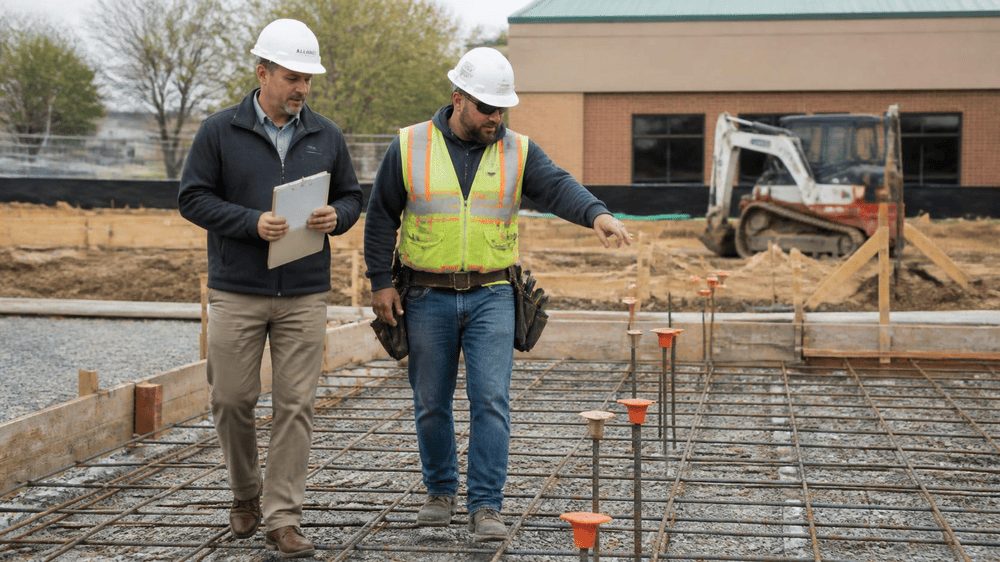
A third-party inspection consultant is not part of a general contractor’s crew or the design team. And, they are not a government employees either. They are independent expert consultants whose sole job is to check construction work against a specific standard. This is on behalf of the party who hired them.
That last part matters more than it sounds. The same title, third-party inspector, can mean two very different jobs depending on who is doing the hiring. Whether it’s the project owner or the local building department, understanding that difference is the key to understanding this role.
What Is a Third-Party Inspection?
A third-party inspector is a qualified construction professional, independent from the contractor performing the work. They review plans and inspect completed work for compliance with the contract documents. The word “third-party” simply means they are not one of the two parties in the actual contract. They are not the owner and not the contractor.
This independence is the entire point of the role. A contractor checking its own work has an obvious incentive to overlook small problems. A third-party inspector has no financial stake in the outcome. Therefore, it makes their findings more reliable to whoever hired them.
What a Third-Party Inspection Includes
Day to day, a third-party inspector’s work usually includes a mix of some or all of the following tasks:
- Reviewing permit drawings and specifications for accuracy, conflicts, and missing details before construction starts.
- Visiting the site at key construction milestones to check completed work against the approved plans.
- Checking for compliance with the building codes that apply in that jurisdiction, and with general industry construction standards.
- Documenting findings through written reports, dated photographs, and site visit notes.
- Flagging deficiencies and tracking whether the contractor corrects them.
The specific mix depends entirely on who hired the inspector and why. This is where the owner-versus-authority difference comes in.
When an Owner Hires a Third-Party Inspector
When a project owner hires a third-party inspection consultant directly, the goal is quality control on the owner’s behalf. The consultant works for the owner alone and has no obligation to the contractor or to the local building department.
An owner’s third-party inspector typically reviews whether the contractor’s work:
- Matches the approved drawings and specifications through the latest revisions
- Reviews architectural and structural drawings meet code compliance
- Visits the jobsite during critical work phases to inspect framing, pours, rough-ins before work gets covered up
- Provide material testing services (if contracted) to ensure concrete, soil compaction, rebar, asphalt meet structural standards
- Spot safety hazards, construction errors, or deviations from the schedule
- Flags non-compliant work, that may result in a formal notice or a recommendation for a stop-work order until fixed
- Checks coordination between trades
- Builds a documented record of the project as it progresses. This documentation becomes valuable later if a dispute comes up over workmanship or schedule.
Importantly, this inspector’s approval has no legal authority when hired by the owner. They cannot issue a permit, and their sign-off does not satisfy any code requirement on its own. Their job is protecting the owner’s interests, not enforcing code or the requirements of the authority having jurisdiction (AHJ).
When the Local Governing Authority Uses a Third-Party Inspector
The local building department is often called the Authority Having Jurisdiction (AHJ). It’s the government office legally responsible for enforcing building codes and issuing permits and the final Certificate of Occupancy.
Many AHJs face more inspection requests than their own staff can handle, especially in busy commercial markets. Some jurisdictions authorize approved third-party inspectors to perform inspections that the AHJ’s own staff would otherwise perform. This may included tasks such as footing, framing, and rough mechanical, electrical, and plumbing inspections.
Whether that third-party inspector’s report legally satisfies the code requirement on its own depends on your state. The state AHJ may still need to accept and sign off on it separately. That distinction is significant enough to cover on its own below.
Third-Party Inspection Authority Varies by State
A handful of states have passed what are known as “Private Provider Statutes”. These laws give a qualified, licensed third-party inspector the legal authority to perform code-compliance inspections in place of the building department. This carries the same legal weight as if the department’s own inspector had done it.
Florida has the broadest version of this law, under Florida Statute 553.791. An owner or contractor can file a formal election to use a private provider. And, that provider’s plan review and inspections stand in for the local building official’s.
Georgia allows the same thing under O.C.G.A. 8-2-26(g), made permanent through House Bill 493. This is when the local government cannot meet its required review timeframe. Texas expanded similar third-party authority through House Bill 14 in 2023. North Carolina and South Carolina each have their own versions as well.
Not every state works this way. Nevada, for example, has no statewide private provider statute. Instead, individual jurisdictions, such as Clark County, maintain their own approved third-party inspector listings. But, those inspectors operate under the local building department’s direct oversight. This is rather than independent legal authority granted by state law. The building department has the final word.
An owner should never assume a third-party inspection automatically satisfies a code requirement. It depends on whether that state, and that specific jurisdiction, has adopted a private provider law and authorized that inspector under it.
Finding the Rules for Your State
Private provider laws exist in a growing number of states beyond the ones above. The details of each one change fairly often as legislatures update them. Rather than relying on a general list, an owner should confirm the current rule for their specific state and jurisdiction. Never automatically assume a third-party inspection carries legal weight.
- Call your local building department directly and ask whether they accept third-party or private provider inspections. If so, under what conditions.
- Check the state legislature’s website for the state’s building code statutes. Search for terms like “private provider” or “alternate inspection.”
- Ask the project architect or engineer, since they typically already know which inspection path applies in that jurisdiction.
This confirmation takes a phone call or a quick search. It removes any doubt about whether an inspection is legally sufficient before it becomes a problem at permit sign-off.
How the Two Consultant Roles Differ
Both roles share the same title and the same basic skill set. But, they answer to different people and serve different purposes.
- An owner’s inspector reports only to the owner. The AHJ-authorized third-party inspector reports to, or works under the oversight of, the building department.
- The owner’s inspector’s report has no legal standing. An AHJ-authorized third-party inspector’s report may satisfy an official code inspection outright. Or, may still require the department’s sign-off, depending on whether the state has a Private Provider Statute.
- An owner’s inspector focuses on quality, coordination, and contract compliance; an AHJ-authorized third-party inspector focuses specifically on code compliance at defined inspection milestones.
- An owner can hire any qualified inspector they choose. An AHJ-authorized third-party inspector must be pre-approved, certified, or licensed under that specific state’s and jurisdiction’s rules.
An owner can use both at the same time, and on larger commercial projects, this is common. The AHJ-authorized inspector helps satisfy the legal permit requirements, where state law allows it. The owner’s own third-party inspector protects the owner’s separate interest in quality and documentation. The AHJ code inspection alone does not cover this.
A Real-World Example
A commercial developer building in a jurisdiction with a backlogged building department uses an AHJ’s approved third-party inspection program. This is to keep code-required inspections on schedule. Those inspections confirmed the framing met code and cleared the project to move forward.
Separately, the owner had also retained an independent third-party inspector. Hired from day one for quality control. That inspector caught improperly spaced rebar in a foundation wall section before the concrete pour. This was an issue the code-focused framing inspection, which happened later, would never have been positioned to catch. The two inspectors were doing different jobs, and neither one replaced the other.
What a Third-Party Inspector Is Not
A third-party inspector’s approval, in either role, is just a snapshot. It confirms that visible work met the applicable standard at the moment of inspection. It is not a guarantee of future performance. And, it does not cover work that was already covered up before the inspection took place.
An owner’s third-party inspector also does not replace the code-required inspections performed or authorized by the AHJ. The two serve different purposes, and skipping one because the other happened is a common and costly misunderstanding.
Third-party inspectors give both owners and building departments a way to get qualified, independent eyes on a project. This is without relying solely on the contractor’s word.
It’s important to understand which kind of third-party consultant is checking what. Also, on whose behalf, and under what legal authority in that state. This is the difference between real protection and a false sense of security.